Thursday, 8 December 2022


FDA Authorizes COVID Omicron Vaccines for Children as Young as 6 Months Old + More

The Defender’s COVID NewsWatch provides a roundup of the latest headlines related to the SARS CoV-2 virus, including its origins and COVID vaccines. The views expressed in the excerpts from other news sources do not necessarily reflect the views of The Defender.


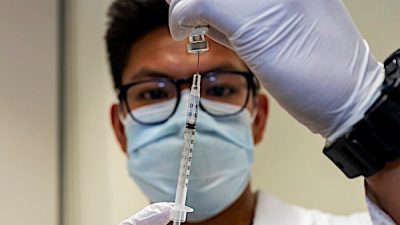
FDA Authorizes COVID Omicron Vaccines for Children as Young as 6 Months Old

CNBC reported:

The Food and Drug Administration on Thursday authorized updated COVID shots that target the Omicron variant for children as young as 6 months old.

The eligibility rules vary depending on whether children received Moderna’s or Pfizer’s original vaccines as their primary series. Children 6 months through 5 years old who received Moderna’s two-dose primary series are now eligible for an Omicron booster two months after their second shot.

Kids ages 6 months through 4 years old who have not yet received the third dose of Pfizer’s primary series will now receive the Omicron shot as their third dose. But kids in the same age group who have already completed Pfizer’s three-dose primary series cannot get the Omicron shot as a booster, or fourth dose, at this time.

The FDA, in a statement, said it did not authorize Omicron shots for those children who already received three doses of Pfizer’s vaccine because the agency is still waiting on supporting data for the booster dose. That data is expected in January and the FDA will review it as quickly as possible, the agency said.

4 Takeaways From Sen. Johnson’s Panel on COVID Vaccines

The Epoch Times reported:

Sen. Ron Johnson (R-Wis.) held a panel on COVID-19 vaccines in Washington on Dec. 7, featuring experts including Dr. Robert Malone and Dr. Peter McCullough. Experts discussed vaccine development, vaccine composition, data from insurance and adverse event systems and other topics. Here are four takeaways from the panel.

Edward Dowd, a former BlackRock analyst now with the Humanity Project, showed data from the Society of Actuaries 2021 Group Life Insurance survey that showed a jump in excess mortality among young and middle-aged adults starting around the time the vaccines began being administered.

Several vaccines have been linked to side effects such as myocarditis, a form of heart inflammation that can turn deadly. Doctors testifying during the panel said they’ve seen an increase in patients with the inflammation. Dr. Kirk Milhoan, a pediatrician based in Hawaii, said he’s seen more cases. The studies show that the spike protein, which the vaccines cause the body to make, is “cardiotoxic and cause the heart to be inflamed,” Milhoan said. “Let that sink in, the current public health plan is asking our own body to make a cardiotoxin.”

Dr. Harvey Risch, a professor emeritus of epidemiology at the Yale School of Public Health, presented data from the CDC that show young people face little risk from COVID-19.

McCullough, chief scientific officer of The Wellness Company, said that no randomized, double-blind, placebo-controlled trial has shown the vaccines reduce hospitalization or death. Such trials, known as RCTs, are generally considered the highest form of evidence for a drug.

French Health Authority Advises Against Use of Valneva’s COVID Vaccine

Reuters reported:

France’s Haute Autorite de Sante public health body advised the government not to use Valneva’s (VLS.PA) VLA2001 COVID-19 vaccine as part of its wider vaccination strategy, although two rival products should be included as booster shots. The snub caused Valneva’s shares to fall, with Valneva down by around 1% during the late morning trading session in Paris.

The HAS body recommended Sanofi (SASY.PA) and GSK’s (GSK.L) VidPrevtyn Beta and Novavax‘s (NVAX.O) Nuvaxovid shots to boost the vaccination of people who can not be given bivalent mRNA vaccines which shall remain the first choice, it said. “However, the HAS does not include the use of Valneva’s VLA2001 vaccine in the current primary vaccination strategy”, it added.

“There are no clinical efficacy or immunological data about the current variants. Therefore, it has not been retained for the time being,” Elisabeth Bouvet, president of the HAS’ vaccination department, told a news conference.

Experimental Decoy Drug Tricks Coronavirus, Then Destroys It

Los Angeles Times reported:

The coronavirus has been a shifty foe, with new variants and subvariants rapidly evolving to evade vaccines and treatments. Researchers at Boston’s Dana-Farber Cancer Institute are working on an experimental drug that takes one of the virus’ most dangerous traits — its talent for mutation — and turns it back on itself.

When the coronavirus binds to a specific type of receptor on the surface of a cell, it drives its spike protein in like a switchblade and initiates an infection.

The drug is designed to mimic that receptor, working like an assassin in an attractive disguise. When the coronavirus attempts to bind to it instead of to the real thing, it destroys the structure of the spike protein, permanently disabling the mechanism that would make that switchblade, according to a report published Wednesday in the journal Science Advances.

This approach backs the coronavirus into a corner: If it adopts a mutation that makes it bind less effectively with the decoy drug, it will also bind less effectively to the human cell.

DeSantis Pledges to Hold Vaccine Manufacturers ‘Accountable’

The Epoch Times reported:

A comment made by Gov. Ron DeSantis during a private Republican Party of Florida event at the Florida Governor’s Mansion has activists across the state abuzz with hope for the change they’ve been requesting for more than a year.

“We are going to work to hold these manufacturers accountable for this mRNA because they said there was no side effect. And we know that there have been. A lot,” DeSantis said at the Dec. 3 event in Tallahassee.

“And so we did a study in Florida and we saw an 86% increase in [problems in] cardiac-related activity from people 18 to 39 from mRNA shots. And so we’re going to be doing some stuff to bring accountability there.”

Under the Public Readiness and Emergency Preparedness Act of the federal Emergency Use Authorization, the U.S. Health and Human Services (HHS) Secretary issued several declarations that provide liability immunity for activities related to medical countermeasures against COVID-19, as long as they did not commit fraud.

Walgreens Launches Free Paxlovid Delivery Service With DoorDash and Uber

ABC News reported:

Walgreens has launched a new delivery service for the COVID-19 oral antiviral therapy Paxlovid in partnership with DoorDash and Uber to get the treatment “directly to the doorsteps of those who need it.”

Walgreens on Thursday said it has more than 8,000 locations offering same-day delivery services, available to anyone who lives within 15 miles of participating stores. Walgreens said that means real access to a lot of Americans — offering it to roughly 92% of the population.

Paxlovid, from Pfizer, is one of the few treatments still expected to hold up against currently circulating subvariants and comes as coronavirus hospitalizations are trending upward in the elderly.

To use Walgreens’ new delivery service, eligible patients must have a Paxlovid prescription from a healthcare provider.

Wisconsin Youth Health Survey Shows Stress up Since COVID

Associated Press reported:

More than half of Wisconsin high school seniors surveyed in the fall of 2021 reported having significant problems with feeling very anxious, nervous, tense, scared or like something bad was going to happen, according to a health risk survey.

Rising numbers of students also reported symptoms of depression, self-harm and thoughts of suicide, according to the CDC’s Youth Risk Behavior Survey released Tuesday.

The results are the first picture of Wisconsin students’ mental health since the onset of the pandemic, the Milwaukee Journal Sentinel reported. The results were publicized by the Wisconsin Department of Public Instruction, which called for “drastic action.”

The Youth Risk Behavior Survey goes out every two years to a sample of schools across the country selected to inform county, state and national reports, including 43 Wisconsin high schools. The national results have not yet been shared for 2021.

FDA Gives Priority Review to Pfizer RSV Vaccine for Older Adults

The Hill reported:

The Food and Drug Administration (FDA) accepted Pfizer’s application for an RSV vaccine for older adults and is expected to make an approval decision by the spring.

Pfizer in a statement on Wednesday said the FDA is going to review its application under the priority review program, which reduces the approval timeline by four months. The end of the review period is expected to be May 2023, Pfizer said.

In healthy adults and older children, RSV typically causes mild, cold-like symptoms that go away with moderate rest and self-care. But it can result in severe illness in infants and older adults.

There is no vaccine for RSV in either adults or children. If approved, Pfizer’s candidate would become the first RSV vaccine for older adults.

WHO: COVID Disruption Resulted in 63,000 More Malaria Deaths

Associated Press reported:

The coronavirus pandemic interrupted efforts to control malaria, resulting in 63,000 additional deaths and 13 million more infections globally over two years, according to a report from the World Health Organization published Thursday.

Cases of the parasitic disease went up in 2020 and continued to climb in 2021, though at a slower pace, the U.N. health agency said Thursday. About 95% of the world’s 247 million malaria infections and 619,000 deaths last year were in Africa.

“We were off track before the pandemic and the pandemic has now made things worse,” said Abdisalan Noor, a senior official in WHO’s malaria department.

Noor said he expected the wider rollout of the world’s first authorized malaria vaccine next year to have a “considerable impact” on reducing the number of severe illnesses and deaths if enough children get immunized, adding that more than 20 countries have applied to vaccines alliance Gavi for help in securing the shot. Still, the vaccine is only about 30% effective and requires four doses.

Uganda Receives 1,200 Doses of Ebola Vaccine Candidates for Trials

Reuters reported:

A shipment of Ebola vaccine candidates set to be used in a clinical trial has arrived in Uganda, where an outbreak has infected 142 people and killed at least 56, health authorities said on Thursday.

Last week Uganda said it had discharged its last Ebola patient from the hospital, raising hopes for the end of an outbreak of the deadly hemorrhagic fever declared on Sept. 20.

The WHO had said it would send three vaccine candidates to Uganda to be used in a trial, one by the University of Oxford and Serum Institute of India, another by the Sabin Vaccine Institute and a third by Merck & Co Inc. (MRK.N).

At a ceremony to receive the vaccines in Entebbe, about 45 km (28 miles) south of the capital Kampala, Health Minister Jane Ruth Aceng said the 1,200 doses that had arrived were from the Sabin Vaccine Institute.


‘Democracy at Work’: L.A. County Delays Decision on Fast-Tracking Wireless Towers After Public Outcry

By Suzanne Burdick, Ph.D.     12/08/22


Citing “unanswered questions,” the Los Angeles County Board of Supervisors on Tuesday unanimously agreed to delay its final vote on two ordinances that would allow for the fast-tracked proliferation of wireless infrastructure without due process and without residents’ right to appeal.

The Los Angeles (L.A.) County Board of Supervisors on Tuesday unanimously agreed to delay its final vote on two ordinances that would allow for the fast-tracked proliferation of wireless infrastructure without due process and without residents’ right to appeal.

The five board members will seek experts’ opinions and discuss questions raised by constituents during a closed session on Dec. 20. The board scheduled another public hearing and the final vote for Jan. 10, 2023.

Commenting on the delayed vote, Janice Hahn, board chair, said, “We have a lot of questions and a lot of those came up during public comment.”

Children’s Health Defense (CHD) attorney W. Scott McCollough said:

“Today’s vote is significant because Los Angeles County is the largest county in the nation by population. Its actions influence what happens elsewhere. The result here will soon be exported to other local jurisdictions.”

Brenda Martinez — an L.A. County resident and activist on the executive committee of Fiber First Los Angeles County, a nonprofit that promotes fiber optic networks, agreed:

“The Dec. 6 vote has major precedent-setting implications in other cities. Other smaller municipalities seem to look up to the county for guidance. Everyone’s eyes and ears are on the county’s decisions.

“What made this happen was the enormous response from the public: thousands of emails sent out to the supervisors and over 300 pages of comments in opposition on the county portal website.”

McCollough, a former Texas assistant attorney general and telecom and administrative law attorney, said the delayed vote was the result of “democracy at work,” but the fight is not over.

“We must defeat ordinances that institute a rubber-stamp process for cell towers by eliminating public input, take away everyone’s property and privacy rights and allow thousands of towers to be placed in environmentally and historically sensitive areas without concern of the significant negative effects,” he said.

McCollough also told The Defender:

“The action alerts CHD ran on this issue generated a huge response and created great hesitancy by the board members, and the hard work on the ground by the local public interest groups securing so many people calling in or appearing in person got us over the top.”

Concerned citizens submitted “an overwhelming number of public comments” in opposition to the ordinances and the board members “simply did not want to vote against their constituents,” McCollough said.

CHD generated more than 15,000 comments before Tuesday’s meeting, via an action alert.

“Simply put, the politicians got scared, so they delayed,” McCollough said.

Susan Foster, co-founder of the nonprofit California Fires & Firefighters, who attended the meeting said she was “not surprised the supervisors decided to postpone” their decision, “given all the opposition to the passage of these two wireless ordinances that are deeply telecom-friendly.”

Foster added:

“This postponement shows that a majority of the supervisors are starting to recognize the fact that if they don’t protect the residents from cell towers in their front yards they will be voted out of office. It’s that simple.”

CHD and several of the other public interest organizations are prepared to take legal action against the county if the ordinances pass, McCollough said.

CHD is covering some of the legal costs for a woman in L.A. County who sued over a small cell placed on her property after the county staff unilaterally followed the “no notice or hearing” “ministerial” process they want the board to codify for small cells even though the current code does not allow that.

‘Thousands of wireless transmitters could pop up’ if ordinances pass

The two ordinances up for a vote in L.A. County are amendments to title 16 and title 22 of the Los Angeles County Code. These amendments seek to establish regulations for small cell wireless communication facilities in highways, as well as establish regulations for wireless facilities on private property in the unincorporated areas of L.A. County and associated provisions.

The proposed ordinances have been met with significant opposition from the public.

According to Fiber First L.A., if passed, the two ordinances “would remove public notice, setbacks, oversight, safety and environmental review, and any opportunities for appeal.”

Thousands of wireless transmitters could pop up across unincorporated areas of Los Angeles County in the next few years, Public News Service reported.

Tuesday’s meeting was the second reading of the proposed ordinances. The first took place on Nov. 15 when the board — in a 4 to 1 vote — granted preliminary approval.

Hilda Solis, who voted against the ordinances at the November meeting, on Tuesday said, “I think this opens up a can of worms, obviously, for a lot of us — and for me, I was pretty clear last time.”

Other board members, including Lindsey Horvath and Kathryn Barger, said they still had concerns about the cumulative impact of the proliferation of wireless cell towers and that those questions needed to be answered before voting on the ordinances.

Wireless towers pose fire risk, expert says

During the meeting, Foster — who has spent the last two decades advocating for firefighters who experienced neurological and immunological harm due to the presence of cell towers on their stations — testified about the dangers of wireless cell towers.

“Four major California wildfires in the last 15 years alone were started by telecommunications equipment,” she said. “Two of these fires — the Malibu Canyon Fire in 2007 and the devastating Woolsey Fire in 2018 — took place in L.A. County and caused over $6 billion in damages.”

Foster pointed out that “the guilty parties in those two fires were Southern California Edison, AT&T, Verizon, Sprint (now T-Mobile) and NextG (now Crown Castle)” and that the “California Public Utilities Commission accused every one of those parties of impeding the fire investigations.”

“Safety belongs to the county to regulate,” Foster said. “The FCC [Federal Communications Commission] never mandated that L.A. County burn itself to the ground.”

Until now, the county has required a conditional-use permit with public input on each wireless transmitter.

Do FCC rules necessitate fast-tracking wireless permit procedures?

Bruce Durbin, supervising regional planner in the county’s Department of Regional Planning, told Public News Service the conditional-use permit process with public input on each wireless transmitter had become problematic because the FCC requires government agencies to approve or deny them within two months.

“A conditional-use permit in California requires 30-days public notice, a public hearing in front of the commission,” Durbin said. “And to be able to approve that all within 60 days, it’s impossible.”

But McCollough disagreed. While L.A. County staff have argued that “the FCC ‘shot clock’ rules functionally (not legally) require elimination of public involvement since the processing time is so compressed,” that is not true, he said.

“They [L.A. County staff] claim they have no choice other than to rubber-stamp wireless applications.” However, “the FCC emphasized that its ‘shot clock’ rules do not preempt state and local rules requiring notice, hearing and environmental evaluations,” McCollough said.

He added:

“There is a way to accomplish the task within the compressed timeline. The key is ordinance provisions that detail all the information the staff and public needs to evaluate the application and identify issues. The applicant must be required to perform an environmental evaluation before [filing] the application. This streamlines the process because it will ensure only disputed issues — and usually there will be only a few of them — will have to be handled.”

“This is how the FCC does it for antenna registrations,” McCollough added.

According to McCollough, around roughly 2018 L.A. County unilaterally implemented a fast-tracked “ministerial” process — “that is bureaucrat-speak for ‘rubber stamp,'” he said — even though its policy guidance from 2010 says wireless permits must be handled using notice and comment and are not subject to ministerial treatment.

“Today’s vote was about codifying this process,” he said.

McCollough said that L.A. County staff adopted the idea of using a fast-tracked “ministerial” process for wireless because they are displeased when citizens make them do their job and they have to take into account what constituents have to say.”

He added:

“The wireless industry wants to get rid of bothersome public input or involvement in wireless facility siting matters, even for cell sites that would be on utility poles or light standards in the right of way adjoining people’s property or on private property next door.

“They want a process where people figure out what has happened only after it is too late to do anything.

“Folks will come home some evening and an ugly, toxic tower will be right next to their living room, bathroom and bedroom windows but the time to challenge the permit decision will have already passed.”

Fiber-optic networks a better option, many say

According to Fiber First L.A., fiber-optic networks are superior to wireless networks, in terms of cost and in providing high-speed internet — and they pose fewer potential health risks and fire risks.

According to a June 22 report by independent consulting firm CTC Technology & Energy, fiber-optic networks offer numerous advantages when compared with fixed-wireless technologies, including:

  • Fixed-wireless technologies will continue to improve but will not match the performance of fiber-optic networks—primarily because the existing and potential bandwidth of fiber is thousands of times higher than wireless. Also, fixed-wireless networks have inherent capacity limitations that sharply limit the number of users on a network using a given amount of spectrum.
  • Fixed-wireless network coverage is adversely affected by line-of-sight obstructions (including buildings and seasonal foliage) and weather. While a fiber network can physically connect every household in a service area (and deliver predictable performance), it is significantly more complex for a fixed-wireless network to deliver a line of sight to every household in a service area.
  • Scalability is a critical challenge to fixed-wireless deployments, both technically and financially. A given amount of wireless spectrum is capable of supporting a given amount of network capacity. If the number of network users increases or users need more bandwidth, the network operator must increase the spectrum (which is both scarce and extremely expensive—and may not be possible), upgrade the technology, or add antennas. It is challenging to design a fixed wireless network that will provide sufficient, robust upstream and downstream capacity and reach all the addresses in unserved areas.
  • The fastest fixed-wireless technologies (such as those that use millimeter-wave spectrum) are effective in delivering short-range service to closely grouped households in urban and suburban settings. These technologies are largely unsuitable for serving rural communities because of the typical geographic dispersion of addresses and the lack of mounting structures (such as towers or building rooftops).
  • Fiber is sustainable, scalable, and renewable. It offers greater capacity, predictable performance, lower maintenance costs, and a longer technological lifetime than fixed-wireless technologies. Fiber service is not degraded by line-of-sight issues and is not affected by the capacity issues that constrain fixed wireless networks.

The report — commissioned by the Communications Workers of America — also pointed out that the U.S. government’s Broadband Equity, Access, and Deployment Program’s notice of funding opportunity gives preference to fiber over fixed wireless.


Bombshell. India’s “Shock” and Sudden Excess Mortality (April-July 2021), Caused by COVID Vaccine Rollout in Its Early Stages?

By  Prof Denis Rancourt   Global Research, December 07, 2022


Abstract


India experienced a unique, sudden, unprecedented and extraordinarily large excess all-cause mortality event in April-July 2021, which is not adequately explained as a “second wave” or as being caused by a new variant of concern. After an overview of four recently published studies that have quantified the April-July 2021 excess all-cause mortality event, we give ten numbered arguments as to why we conclude that the extraordinary mortality event was caused by India’s vaccine rollout in its early stages. Therefore, it appears that the early rollout of the vaccine in India in April-July 2021 was devastating, causing the deaths of approximately 3.7 million residents, on administering approximately 350 million doses of the vaccine.


*


India experienced an extraordinary excess-mortality shock in April through July 2021, not seen in any other country in the world.


The mortality by week rose to almost 700% of its baseline value in April 2021, based on 90 municipalities in the state of Gujarat (Acosta et al. 2022; their Fig. 2), and the mortality by month rose to almost 400% of its baseline value in July 2021, based on 19 Indian states, 1.27 billion population (Leffler et al. 2022; their Fig. 1). To be clear, this represents all-cause mortalities that are 7-fold (by week) and 4-fold (by month) greater, respectively, than the pre-Covid (2019) all-cause mortalities in India.


This 4-month April-July 2021 excess mortality event in India is described in four independent studies published in leading medical journals (Acosta et al. 2022; Jha et al. 2022; Leffler et al. 2022; Lewnard et al. 2022); and it represents the great majority of excess all-cause deaths for the entire Covid period examined since a pandemic was declared by the World Health Organization on 11 March 2020.


Given the extraordinary characteristics of the 4-month April-July 2021 excess mortality event in India, it is useful to reproduce key figures from the said studies, in order to grasp its significance and nature, as follows.


[...]


The article, Bombshell. India's "Shock" and Sudden Excess Mortality (April -July 2021), Caused by COVID Vaccine Rollout in Its Early Stages, can be read on globalresearch.ca.

Saturday, 3 December 2022


By Eurekafreepress.com/

Australian businesses and professionals that were financially affected by the unfair and unjustified COVID mandates, especially the economically-draining lockdowns, have recently banded together to file a class action suit against state and federal authorities.

The group, together with several lawyers and a case manager, is now in the process of interviewing persons, businesses, establishments, and organisations whose financial interests were severely limited and affected by the COVID mandates as it hopes to lodge a class action suit by February 1, 2023.

“We’ve begun a class action group for any person, business, club, pub, or employee that was financially affected by the COVID mandates. We need to reach everyone in Australia that has been financially affected,” Bridge Walker, one of the organisers said.

The organisers say the focus of the class action is solely for those affected by the COVID mandates as a separate class action suit is also in the works to be filed against implementers of dangerous COVID vaccinations and boosters.

Click Here for AUSTRALIAN COVID MANDATE CLASS ACTION REGISTRATION


Friday, 2 December 2022


Make Way for the “Killer Robots”: The U.S. Government Is Expanding Its Power to Kill

     By John W. Whitehead and Nisha Whitehead

     Gloval Research, December 01, 2022


“Crush! Kill! Destroy!”—The Robot, Lost in Space

The purpose of a good government is to protect the lives and liberties of its people.


Unfortunately, we have gone so far in the opposite direction from the ideals of a good government that it’s hard to see how this trainwreck can be redeemed.


It gets worse by the day.


For instance, despite an outcry by civil liberties groups and concerned citizens alike, in an 8-3 vote on Nov. 29, 2022, the San Francisco Board of Supervisors approved a proposal to allow police to arm robots with deadly weapons for use in emergency situations.


This is how the slippery slope begins.


According to the San Francisco Police Department’s draft policy, “Robots will only be used as a deadly force option when risk of loss of life to members of the public or officers is imminent and outweighs any other force option available to SFPD.”


Yet as investigative journalist Sam Biddle points out, this is “what nearly every security agency says when it asks the public to trust it with an alarming new power: We’ll only use it in emergencies—but we get to decide what’s an emergency.”


A last-minute amendment to the SFPD policy limits the decision-making authority for deploying robots as a deadly force option to high-ranking officers, and only after using alternative force or de-escalation tactics, or concluding they would not be able to subdue the suspect through those alternative means.


In other words, police now have the power to kill with immunity using remote-controlled robots.


Gun shy: Katter shoots down bank's restrictions on trading weapons


Queensland MP Robbie Katter has likened banking giant ANZ’s move to curb e-commerce of firearms through their service to the type of discrimination once meted out to Irish Catholics, calling the action “out of the closet” of history and “victimisation of legal gun owners”.


ANZ Worldline Payment Solutions informed customers their ability to sell guns through mail or telephone orders was being deactivated under a policy that prohibited the online sale of weapons to ensure customers attended in-store to provide licence and permit checks.

But Katter, MP for the sprawling north west Queensland seat of Traeger and leader of Katter’s Australian Party, has blasted the decision as ignorant and reckless virtue-signalling that contributed nothing to public safety.

He slammed the decision as further victimisation of legal gun owners and dealers already struggling to operate within tightening restrictions.

“The reality of this is not that gangsters are walking around with sidearms in the CBD, but that farmers’ wives will now have far less ability to feel safe on their remote stations,” Katter said.

“This will severely restrict access and the operation of businesses for licensed firearm holders who are being recklessly preyed upon, while the really important areas of community safety around firearms remain unaddressed.”

ANZ customer service representatives have reportedly explained the move as a result of ANZ merging their merchant services business with international provider Wordline Payments, who have a global policy not to provide their services to businesses that deal in firearms and related accessories.

Shooters Union Australia president Graham Park called the decision an “uninformed overreach” and part of an ongoing movement of large businesses, including US postal giant FedEx, to cut service to the shooting industry.

“Firearms’ businesses operate under stringent legislation and oversight; it’s not up to banks or payment provider services to impose their own conditions on top of that,” Park said.

“It would help if banks actually knew what the legislation around firearms and ammunition sales was, because then they’d know all firearms and ammunition sales must be between a licensed dealer and a person with a firearms licence – and the licensed person has to be there in person to collect the gun and ammo.”

Park also questioned banks’ rejection of payment services to the shooting industry while approving others.

“Banks have no trouble providing payment services to liquor stores, pubs, and clubs, so why are they making it difficult for firearm businesses?”

Katter said the move felt like a sad chapter from history.

“My mother advised me she wouldn’t bank with NAB growing up as they didn’t lend to Irish Catholics like her family when they first came over,” Katter said.

“This seems funny now how antiquated that type of indiscrete discrimination was. Unfortunately, that attitude has been ripped right out of the closet for businesses that serve licensed firearms owners.”


Thursday, 1 December 2022

Top Oncologist: Cancer in Patients Exploding After COVID Shots

The well-established link between the COVID-19 mRNA shots and blood clots, myocarditis, heart attacks and strokes is reason enough to stop the vaccine program, argues a London oncologist.

And further, the average age of death from COVID-19 in the United Kingdom is 82, which is higher than the age for all other causes, 81.

But there is another reason enough to halt the shots, wrote Dr. Angus Dalgleish, professor of Oncology at St. George’s University of London, in a letter to the British Medical Journal.

“As a practising oncologist I am seeing people with stable disease rapidly progress after being forced to have a booster, usually so they can travel,” he wrote to the BMJ’s editor in chief, Dr. Kamran Abbasi.

“Even within my own personal contacts I am seeing B cell-based disease after the boosters,” he wrote. “They describe being distinctly unwell a few days to weeks after the booster – one developing leukaemia, two work colleagues Non-Hodgkin’s lymphoma, and an old friend who has felt like he has had Long Covid since receiving his booster and who, after getting severe bone pain, has been diagnosed as having multiple metastases from a rare B cell disorder.”

Dalgleish said he has enough experience in the field “to know that these are not the coincidental anecdotes that many suggest, especially as the same pattern is being seen in Germany, Australia and the USA.”

He said his observations fit the pattern observed around the world of innate immune suppression for several weeks after mRNA vaccination.

“All these patients to date have melanoma or B cell based cancers, which are very susceptible to immune control – and that is before the reports of suppressor gene suppression by mRNA in laboratory experiments.”

Dalgleish concluded:

“This must be aired and debated immediately.”

A recent study found a sharp rise in cancer in people under 50.

Researchers at Brigham and Women’s Hospital cited increases worldwide in cancer of the breast, colon, esophagus, kidney, liver and pancreas.

One of the nation’s most prolific pathologists, Dr. Ryan Cole, has reported a significant rise in cancer cases in his Boise, Idaho, lab.

He has received data from oncologists indicating the mRNA vaccines disrupt the immune system. He said in an interview that physicians report “seeing the weirdest cancers, and cancers that we have been able to keep in check and treat, taking off like wildfire – going stage 2, stage 3, stage 4, just like that.”

Meanwhile, a professor at MIT has coauthored a paper that found a 25% increase in heart attack emergency calls among young Israelis after the country’s mRNA vaccine rollout.

Note to readers: Please click the share buttons above. Follow us on Instagram and Twitter and subscribe to our Telegram Channel. Feel free to repost and share widely Global Research articles.

Featured image: Navy Seaman Milan Torres prepares a dose of the COVID-19 vaccine to be administered to a patient at Walter Reed National Military Medical Center, Bethesda, Maryland, Dec. 14, 2020. (DoD photo by Lisa Ferdinando)

  Why Pakistan’s Deep State Tried to Assassinate Imran Khan? By Nauman Sadiq - December 20, 2022   On Nov. 3, a spine-chilling assassinat...